

If you have been following our production department updates you will know that our production team has been working on making improvements to our fleet of guest boats. With most of the major carpentry completed painting is underway.
Painting is a four-step process using marine grade paints that not only make the boats look beautiful but are important for waterproofing and sealing the wood and fiberglass. The first step is sanding to remove a year’s worth of built-up dirt, algae, barnacles, and chipping paint. Next, minor dents and dings are patched and filled with polyester resin-based wood Bondo.
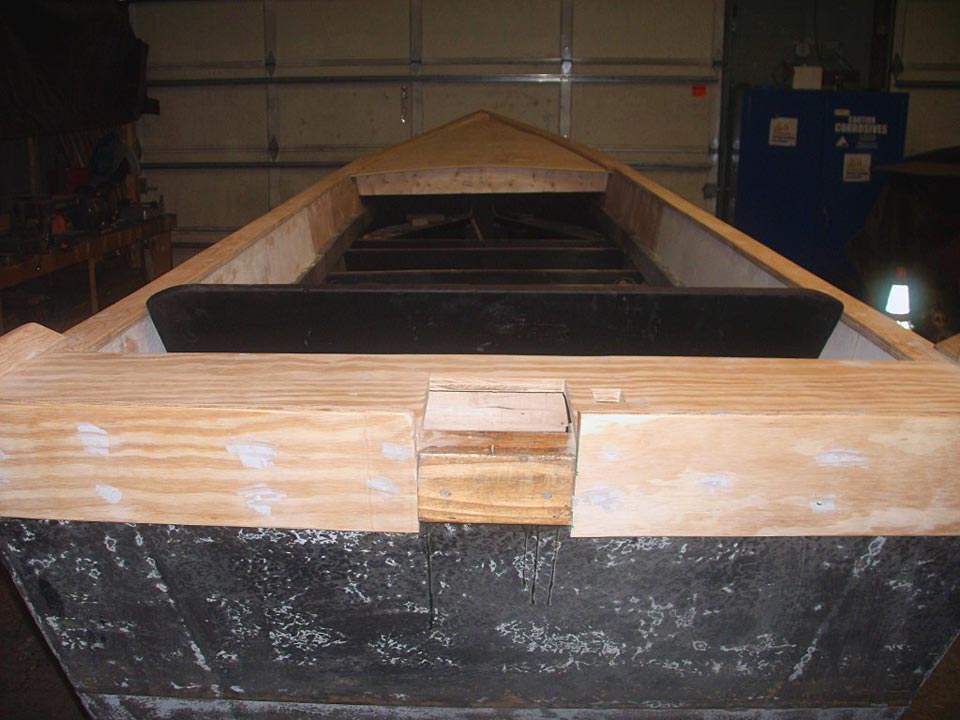
After the surface is prepped and smoothed it is cleaned. Then an epoxy-based primer coat is applied. The last step in the process is to finish painting.
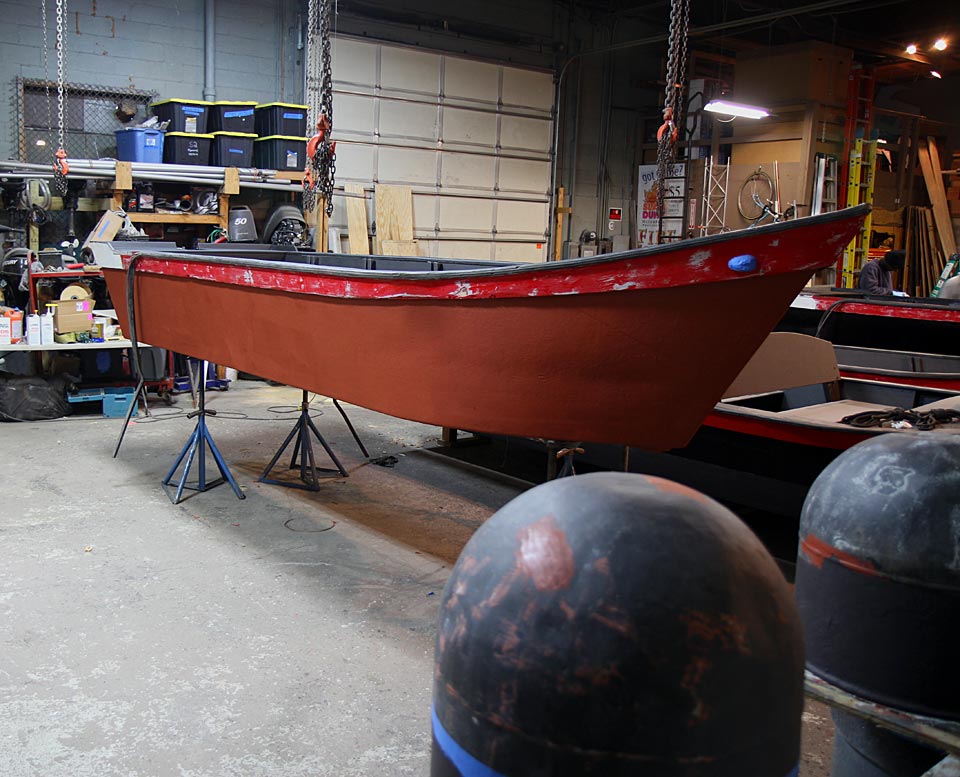
There are four different paints in this step; most of the exterior of each boat gets painted with black yacht enamel and the gunwales are accented in red. The interior of the boats gets several coats of exterior grade acrylic paint while the underside up to just above the water-line gets painted with marine anti-fouling paint. The anti-fouling paint contains copper which is naturally anti-microbial and will lessen the build-up of barnacle growth on the boat.
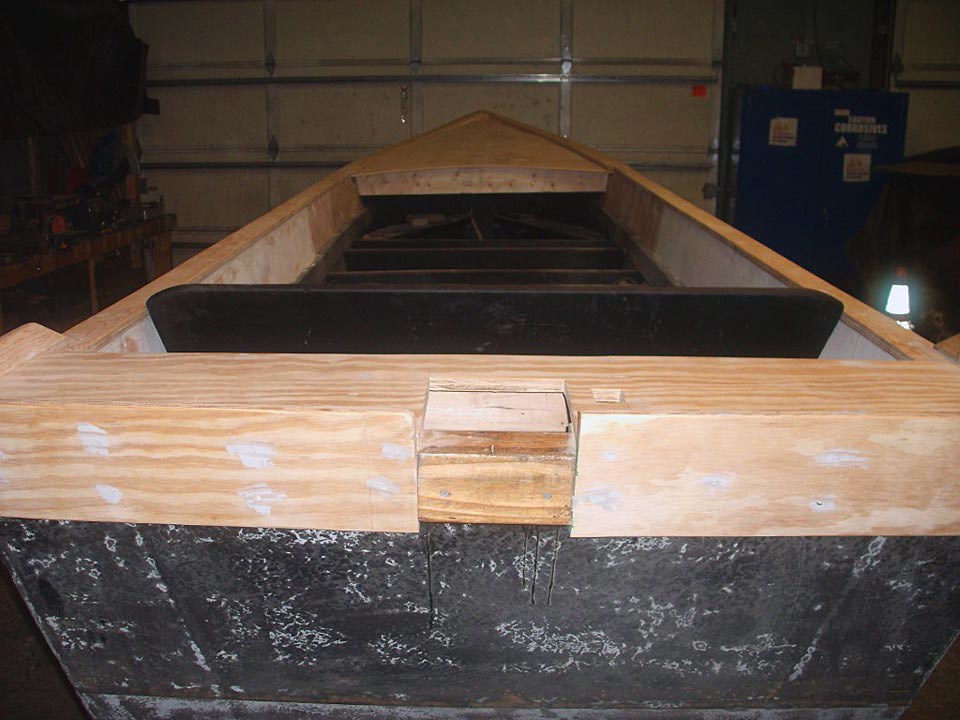
Here are some more photos from the production shop.

About the author

Tim Blankenship, newly appointed Director of Special Projects, is a 22-year veteran of WaterFire and a steadfast advocate for the organization’s mission to unite the community through shared artistic experiences. Having worked across multiple departments, including a decade in production and recent years with the creative services team, Tim brings unmatched institutional knowledge to his new role. He will focus on strengthening internal systems and supporting the creation of new visitor experiences at both the downtown installation and the WaterFire Arts Center.
- Tim Blankenship

- Tim Blankenship

- Tim Blankenship

- Tim Blankenship

- Tim Blankenship

- Tim Blankenship

- Tim Blankenship

- Tim Blankenship

- Tim Blankenship

- Tim Blankenship

- Tim Blankenship

- Tim Blankenship

- Tim Blankenship

- Tim Blankenship

- Tim Blankenship

- Tim Blankenship

- Tim Blankenship

- Tim Blankenship

- Tim Blankenship

- Tim Blankenship

- Tim Blankenship

- Tim Blankenship

- Tim Blankenship

- Tim Blankenship

- Tim Blankenship
- Tim Blankenship
- Tim Blankenship
- Tim Blankenship
- Tim Blankenship

- Tim Blankenship

- Tim Blankenship
 September 11, 2013
 - Tim Blankenship









































Citing the steps of the process in painting the boat, I can see that the paint would last longer. I can say that it turned out to be beautiful and I’m sure that the wood and fiberglass is already waterproof and sealed after the process.